
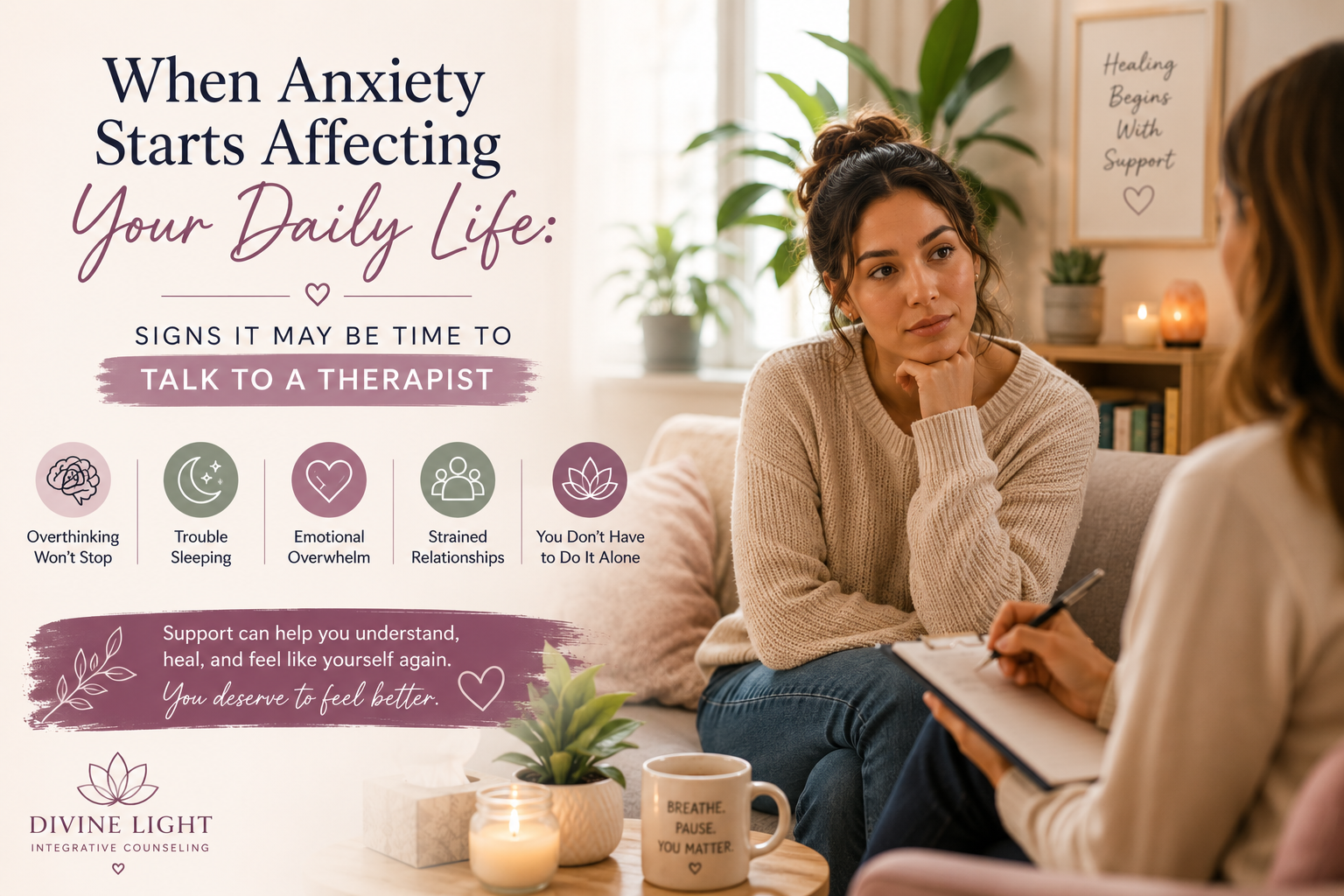
When Anxiety Starts Affecting Your Daily Life: Signs It May Be Time to Talk to a Therapist
When Anxiety Becomes More Than a Passing Feeling
Everyone feels anxious sometimes.
You may feel nervous before an important conversation, stressed before a big decision, or overwhelmed when life becomes too busy. In small amounts, anxiety can be a normal human response. It can alert you, prepare you, and help you pay attention to what matters.
But sometimes anxiety becomes more than a passing feeling.
It may begin to affect your sleep, your relationships, your confidence, your work, your body, and your ability to feel present. You may find yourself overthinking everything, avoiding certain situations, feeling emotionally drained, or struggling to relax even when nothing is wrong.
If this sounds familiar, you are not weak. You are not broken. Your body and mind may be asking for deeper support.
As a psychologist and healer, I often see people wait until they are completely exhausted before reaching out for help. But therapy is not only for crisis. Therapy can be a safe space to understand your anxiety, regulate your nervous system, and reconnect with yourself in a healthier way.
If you have already been learning about anxiety and the nervous system, this article will help you understand when it may be time to receive more direct support.
You Do Not Have to Wait Until You Are Falling Apart
Many people believe they should only talk to a therapist when things become unbearable.
They tell themselves:
“I should be able to handle this.”
“Other people have it worse.”
“I just need to stay strong.”
“I will get help when it gets really bad.”
But this mindset can keep people stuck in silent suffering for too long.
The truth is that you do not have to wait until you are overwhelmed, burned out, or emotionally exhausted before seeking support. Therapy can help you before anxiety takes over your daily life.
Getting help is not a sign of failure. It is a sign that you are ready to understand yourself with more care, awareness, and support.
Sign 1: Your Mind Feels Like It Never Stops
One of the most common signs of anxiety is constant overthinking.
You may replay conversations again and again. You may worry about what someone meant, what could go wrong, or whether you made the right decision. Even when you try to rest, your mind may continue moving.
This can feel exhausting because your brain is always searching for certainty.
Overthinking is often the mind’s attempt to protect you. It tries to predict problems before they happen so you can feel prepared. But when overthinking becomes constant, it can make you feel trapped inside your own thoughts.
A therapist can help you understand why your mind feels unsafe with uncertainty and teach you healthier ways to respond to anxious thoughts.
Sign 2: Anxiety Is Affecting Your Sleep
Anxiety often becomes louder at night.
During the day, you may stay busy enough to distract yourself. But when everything becomes quiet, your thoughts may become stronger. You may lie in bed replaying the day, worrying about tomorrow, or feeling physical tension in your body.
You may struggle to fall asleep, wake up during the night, or feel tired even after resting.
When anxiety affects sleep, it can also affect your mood, focus, energy, and emotional regulation. Over time, this can make daily life feel much harder.
Therapy can help you identify the emotional patterns, stressors, or nervous system responses that may be keeping your body on alert.
Sign 3: You Avoid Situations Because of Fear
Avoidance can be another sign that anxiety is affecting your life.
You may avoid difficult conversations, social situations, new opportunities, relationships, responsibilities, or places that make you feel uncomfortable. At first, avoidance may feel like relief. It helps you escape the anxiety in the moment.
But over time, avoidance can make anxiety stronger.
The more you avoid something, the more your nervous system may begin to believe that the situation is dangerous. This can make your world feel smaller and smaller.
A therapist can help you approach fear gently, safely, and gradually so you do not have to keep living around your anxiety.
Sign 4: Small Things Feel Emotionally Overwhelming
Sometimes anxiety makes small situations feel much bigger than they appear.
A late reply, a change in tone, a mistake, a disagreement, or an unexpected change in plans may create a strong emotional reaction. You may feel rejected, unsafe, embarrassed, angry, or overwhelmed.
This does not mean you are too sensitive. It may mean your nervous system is overloaded or that a present moment is touching an old emotional wound.
If this happens often, you may find it helpful to explore emotional triggers after trauma and how your body responds to stress, fear, and past experiences.
Therapy can help you understand the deeper meaning behind your reactions so you can respond with awareness instead of shame.
Sign 5: You Feel Anxiety in Your Body
Anxiety is not only mental. It can also feel very physical.
You may experience a tight chest, fast heartbeat, shallow breathing, stomach discomfort, headaches, muscle tension, restlessness, or fatigue. You may feel like your body is preparing for danger even when nothing dangerous is happening.
This can be confusing because your mind may say, “I am fine,” while your body says, “I do not feel safe.”
That is why healing anxiety often requires more than positive thinking. Your body needs support too.
Grounding, breathwork, mindfulness, self-compassion, and trauma-informed therapy can help your nervous system begin to feel safer over time.
If you want to start with gentle daily tools, you can read more about mindfulness for stress and anxiety.
Sign 6: Anxiety Is Affecting Your Relationships
Anxiety can also show up in relationships.
You may overthink what others think of you. You may worry about being rejected or abandoned. You may need frequent reassurance. You may shut down during conflict or become defensive when you feel misunderstood.
Sometimes anxiety can lead to people-pleasing. You may say yes when you want to say no. You may hide your feelings to keep peace. You may focus so much on others that you forget your own needs.
These patterns are not something to judge. They are something to understand.
Therapy can help you build healthier communication, stronger boundaries, and a safer relationship with yourself and others.
Sign 7: You Are Tired of Handling Everything Alone
Many people with anxiety are high-functioning.
They show up for work. They care for others. They complete responsibilities. They may appear calm, capable, and strong from the outside.
But inside, they may feel exhausted.
If you are always the one holding everything together, it can be difficult to admit that you need support. But healing does not mean you have to keep carrying everything alone.
A therapist can offer a safe space where you do not have to perform, pretend, or minimize your feelings. You can simply be honest about what you are carrying.
How Therapy Can Help With Anxiety
Therapy can help you understand anxiety at a deeper level.
Instead of only asking, “How do I stop feeling anxious?” therapy helps you explore questions such as:
“What is my anxiety trying to protect me from?”
“When did I start feeling responsible for everything?”
“What patterns keep repeating in my life?”
“What does safety feel like in my body?”
“What support do I need but rarely ask for?”
Through therapy, you can learn tools for emotional regulation, nervous system calming, self-awareness, communication, boundaries, and self-compassion.
Therapy does not erase every challenge, but it can help you feel less alone and more equipped to move through life with clarity and support.
You can also explore Krystal’s holistic healing services to learn more about support for anxiety, emotional healing, trauma-informed care, and self-awareness.
A Simple Practice When Anxiety Feels Strong
When anxiety feels overwhelming, pause for one minute.
Place both feet on the floor.
Take a slow breath in.
Then exhale slowly.
Look around and name three things you can see.
Then gently say to yourself:
“I am here.”
“This is anxiety, not danger.”
“I do not have to solve everything right now.”
“I can take one gentle step.”
This small practice helps bring your attention back to the present moment. It reminds your body that you are not trapped inside the anxious thought.
Want to Understand Your Anxiety Patterns?
Sometimes anxiety is connected to deeper emotional wounds, limiting beliefs, or old survival patterns.
If you are unsure what may be affecting your emotional well-being, you can take the self-awareness quiz to begin exploring your inner patterns, emotional blocks, and healing needs.
Awareness is often the first step toward change.
Conclusion: Support Can Help You Feel Safe Again
Anxiety can feel lonely, confusing, and exhausting. It can make you question yourself, your relationships, your decisions, and your ability to feel peace.
But anxiety is not a personal failure.
It is often a signal that your mind, body, and emotions need support.
You do not have to wait until you are completely overwhelmed to ask for help. You deserve support now. You deserve to understand yourself with compassion. You deserve to feel safe in your body, your emotions, and your daily life.
Healing does not happen all at once. It begins with one honest step.
If anxiety is affecting your peace, your sleep, your relationships, or your ability to feel present, therapy can help you reconnect with yourself and move forward with more clarity.
If you are ready to receive support, book a consultation with Krystal Ortiz Divine Light for anxiety support, emotional balance, and trauma-informed healing.